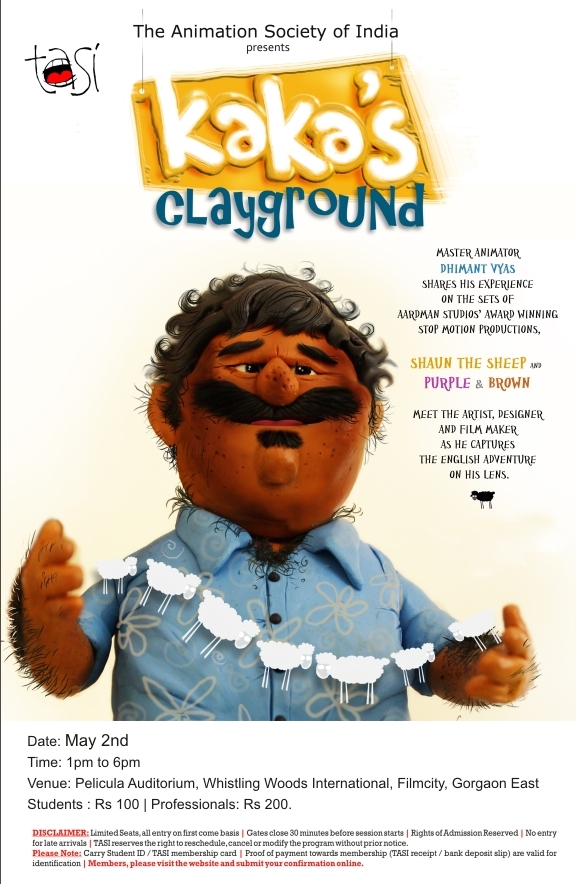
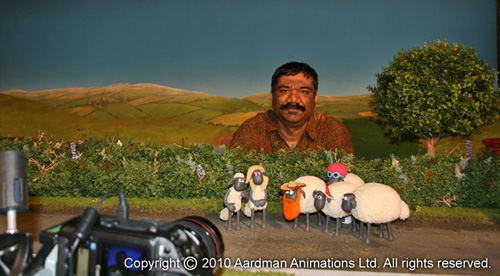
Dhimant Vyas aka Kaka is a much-loved veteran of animation and his sessions always guarantee a full house. So on Sunday, the 2nd of May, when the Pelicula Auditorium at Whistling Woods International was temporarily transformed into Kaka’s Clayground for an afternoon of fun, films and learning, the 300 strong audience got much more than they bargained for. In a span of 5 hours, Dhimant took everyone on a tour of Aardman Studios, Bristol, Bath and Stone Henge, with Shaun the Sheep, Purple, Brown, Wallace and Gromit for company. The audience not only got a peek behind the scenes of many Aardman films but also into the rich culture of Bristol, with its assorted festivals – of kites, balloons, boats and much more! And of course, they learned about ‘clay animation’, ‘stop motion’ and ‘go motion’.
Vaibhav began the session by introducing Dhimant to the audience for the benefit of those who don’t know him (Although I doubt that there was any such person in the crowd). He promised the audience a ‘hot’ session, hinting at the popularity of the event and simultaneously lamenting the fact that the venue had a scheduled power cut. Luckily for the audience, eventually it was only the the session that was hot.
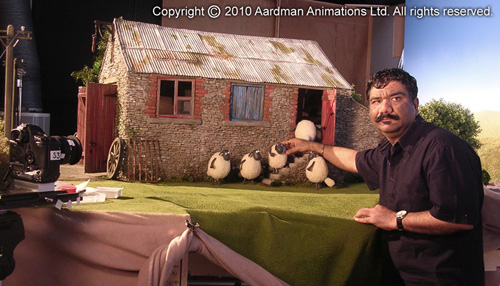
Having previously worked with the Aardman Studio team on ‘Creature Comforts’, Dhimant had been specially invited to work on the new episodes of Shaun the Sheep (currently being aired on Nickelodeon in India), which is how he found himself spending close to a year in Bristol, UK, at the Aardman Studio, working right from pre-production stage to animation.
Dhimant began by screening a few short clips, requesting the audience to refrain from taking any photos or videos as it was all copyrighted material. The agenda was to share his experience of working on two clay-animation TV series at Aardman Studios – ‘Shaun the Sheep’ and ‘Purple and Brown’.
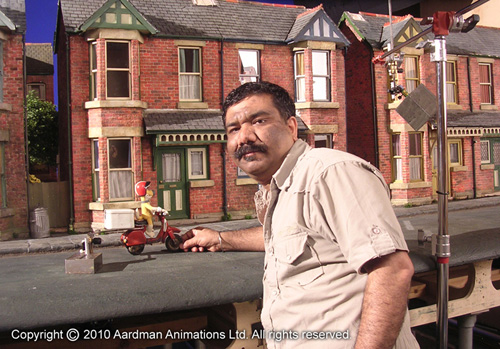
After screening an episode of Shaun the Sheep, rather than just talk about how the films were made, Kaka chose to elucidate through photographs. This part was highly interactive with Kaka explaining in great detail the process of animating for Shaun the Sheep, the audience throwing a constant barrage of questions his way and Dhimant answering each one patiently.
He explained a new technique that he learned and used for the first time – Go Motion. It is similar to Stop-motion, where the objects are moved and captured frame by frame, but in the case of Go-motion, while the frame is being exposed, the background or certain elements on the set are moved, thus creating an illusion of rapid movement. E.g. The road and the bushes in certain scenes were animated using the Go-motion technique while the characters in the foreground were simultaneously being animated in Stop-motion. While the go-motion was being done on ‘ones’, the stop-motion was being done on ‘twos’.
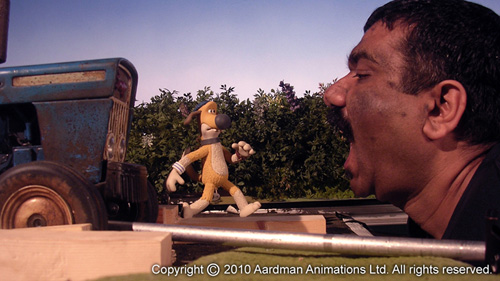
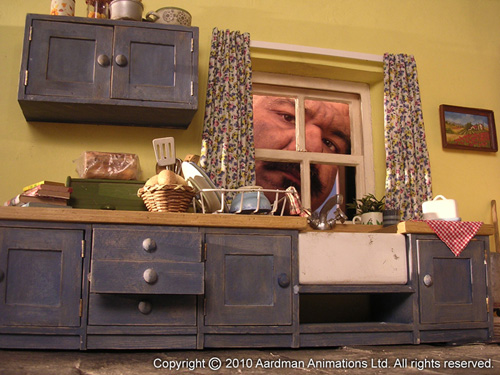
The set for Shaun the Sheep was divided into 16 parts, besides which some sets were created and dismantled as and when required. Dhimant remembered one particular set where the glass window in one of the model-buildings was reflecting his face in many frames. They had to modify the problem part and Dhimant had to crouch each time they exposed a frame. The sets were large and sturdy, with metal reinforcement underneath facilitating the animators to actually walk over the models, some of which were expansive.
Shaun the Sheep has 3 directors, and multiple animators, each one assigned with assistants to help him or her. There are production coordinators, art directors, model-makers, set-designers, riggers, cinematographers, runners and a whole big team handling various responsibilities.
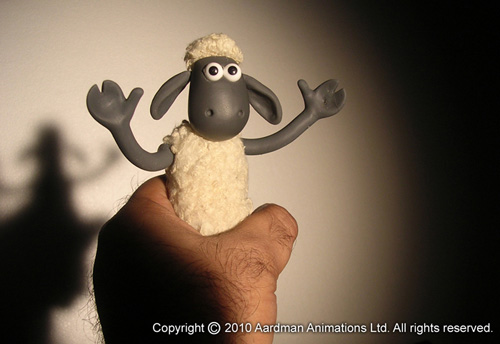
Dhimant showed visuals to explain the construction of the various character models, the mechanical rigs to show flying/jumping movements, props which were only partially constructed (on the camer-facing side only) to enable the animator to move parts freely from the other side. Few scenes were shot against blue or green screens or on glass surfaces. Most character models were created partly with clay and partly with stiffer silicone. The miniature props (everything from furniture to vegetables to houses and trees) were constructed from clay, wax, fiber glass, wood etc. The mouths of most characters were created using replacement parts to facilitate lip-syncing to dialogue. For this particular shoot, more silicone rubber was used than plasticine because it is more durable. The props are all made in-house at Aardman’s moulding facility and not outsourced because of copyright issues. The backdrops were either stretched canvas or cut-outs and matt paintings.
While watching the final film, we tend to forget the effort that goes into making stop-motion films. The maximum animation that can be achieved in a single day is 6-8 seconds but because of the complex nature of the shots, on many days only 2-3 seconds could be completed. All the hard work resulted in back problems for Dhimant and in some photos, one could see him animating while wearing a back support belt around his waist. Reshooting was a luxury they couldn’t afford because there was no time for it, so the animators had to constantly keep checking each shot.
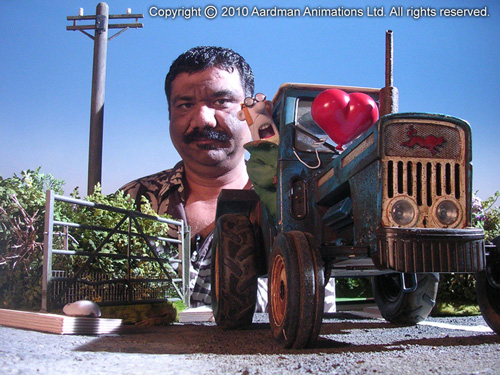
Sometimes there are unexpected problems – like when the prop-makers created the wheels for the car without taking into consideration the fact that the wheels had to move in the scene and the result was that the motion wasn’t smooth and the wheels had to be remade.
The session was peppered with constant questions from the audience.
Q. – “How do you control the light so as to avoid flicker?”
A. – “The lighting in the room you shoot in must be completely under your control. Block all natural light by covering the windows with black paper/cloth. Use a stabiliser/UPS to prevent lights from flickering. Ideally shoot at night when there are lesser chances of people switching lights on and off repeatedly.”
Q. – “Does Aardman Studios use proprietary software to capture the frames?”
A. – “The software – Stopmotion Pro is used at Aardman, as it has a lot of useful features including onion-skinning, rig-remover, live-action syncing etc. They do interact closely with the folks who create the software.”
Next came “Purple and Brown”, and the film clips that Dhimant screened left the audience wondering how the animators had achieved such impressive squash and stretch in a medium like clay-animation. Dhimant revealed some of the tricks using photographs of the models and the animation process. Although replacement models were used most of the time, the animators still had to keep moulding and reshaping the models. There was no armature inside the models – they were completely made of plasticine. In one scene the characters wore little glass helmets and again they were faced with the problem of reflections. The glass and the plasticine kept collecting dust and finger prints so they had to constantly keep cleaning the surfaces. The mouth and lips of the characters were made on the fly so lots of spare parts were required. The model-makers are always at hand to fix any broken or deformed models.
Kaka then showed complete storyboards that were created for 2 episodes of Shaun the Sheep. The painstaking detail in each of them was astounding and bears testimony to the amount of effort goes into the making of each episode. Time flew as the audience got to see several episodes of Shaun the Sheep.
The audience was begging for more and Dhimant happily obliged by screening the Oscar-nominated “A Matter of Loaf and Death”. He also showed a few segments from the American edition of “Creature Comforts” – which he too had worked on during his first stint at Aardman Studio.
Dhimant showed photos of the armatures of the characters from “Creature Comforts” to give everyone an idea of the construction and the materials used. He also shared the slug-sheets used to mark the breakdown of dialogue and lip movements.
Some more Q&A followed.
Q – “How do you show liquids?”
A – “A variety of materials is used to show liquids – for instance the coffee in “A Matter of Loaf and Death” was made using clay mixed with jelly. Other materials include – KY Jelly, Petroleum Jelly (vaseline), White transparent plastic and Glue-gun drops.”
Q – ” How does one learn timing for animation?”
A – ” Observation. And practice. Lots of it. Watch any good actor or actress from a live-action film by pausing and viewing them frame-by-frame. You will notice subtle movements and actions that you would otherwise miss. Make a mental note and use it when you animate.”
Responding to another audience question about the importance of the story in Aardman’s productions – Dhimant shared that at Aardman Studios, everyone is invited to contribute stories. Everyone from Nick Park to the peon can submit a story. A team then brainstorms on the selected story and further tweaks are made during the story-boarding process. The final word, though, belongs to the client – the company that has commissioned the film/series.
On Vaibhav’s request, Dhimant then showed a hand-drawn animation film “Raag Malhar”, which he had made few years ago – it was a brilliant example of timing in animation. He also stressed that as an animator, you never stop learning – he was learning something every day on the sets at Aardman.
‘FUR IN THE JUNGLE — ANOTHER SUCCESS STORY’ Gujarat gave TASI a warm welcome. More than 380 attended session on the 27th of February, encouraging TASI to announce plans for more sessions in Ahmedabad.
The ‘Fur in the Jungle’ workshop by Anand Bhanushali in Ahmedabad on 27th February was an eye opener for students and professionals alike who are looking to begin their careers in Character FX, which includes Fur, Hair, Foliage and Cloth.
Keeping this in mind, the fur workshop was designed using as an example a character from the upcoming animated feature – ‘Delhi Safari’. The session covered the entire process of fur creation from pre-production to post production and all the things in between – i.e. modelling, the actual creation of fur, as well as lighting and compositing of fur.
Anand also laid a great amount of stress on the story itself. He explained the importance of fur in character design and how, by tweaking a few attributes in the fur, you could show different personalities, which complement the overall character design. Anand also showed how the same system of fur with a few minor changes can be used to create foliage (trees, bushes etc.)
‘Fur in the Jungle’ turned out to be quite an extensive and intense technical plus creative session. Students were thrilled to learn the technique of creating feature quality fur and bombarded Anand with a barrage of interesting questions, mostly about lighting and rigging for fur. TASI’s first workshop in Ahmedabad turned out to be super-successful and a highly interactive one that left the audiences begging for more.
Speaker: Vivek Ram
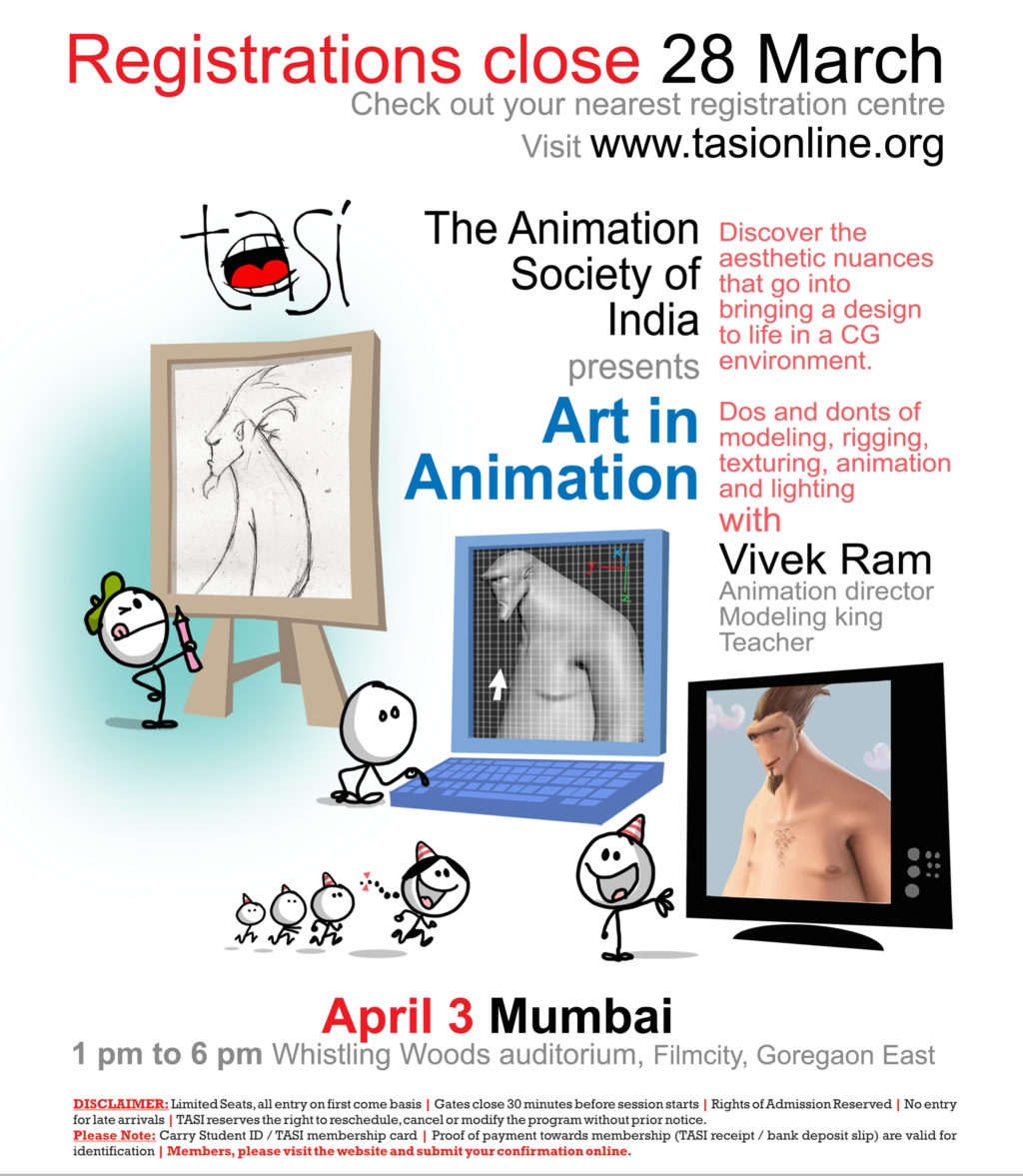
Date: 3rd April, 2010 Time: 1 pm to 6 pm Venue:Whistling Woods International, Film City, Goregaon (East), Mumbai
ART IN ANIMATION – Session Report
by Tanvi Mestry
Yet another exciting session with one of the most skilled artists in the fraternity, Mr. Vivek Ram, was held on the 3rd of April at the Whistling Woods Internationals’ campus. Vivek shared his experience of many years working as a modeling lead for some of the top studios across India, and began the session by drawing out some of the aesthetic nuances that go into bringing a design to life in a CG environment.
He kept the session quite interactive to which the audience responded very positively. He gave a gist of the responsibilities an artist faces while designing, and started off by discussing the crucial role that is played by the Art Directors, VFX supervisors and designers in getting the best out of every single frame of a film. Once the director sets up the mood for a scene, it is then completely left to these artists and what makes their job even more challenging is that they must visualise all of it in a digital world before they can go into actual production. This is where the visualization talent and understanding of the artist can play a key role in pre-production, increasing the scope of improvising every scene and thus optimizing the production duration.
Moving towards a few technical aspects of setting up a model in 3D, Vivek explained the fundamentals of planes as building blocks in the formation of the basic recognizable shape of any object. He elaborated this by starting with a basic cube geometry and breaking down its planes further to take the shape of a human head. Though at a very initial stage, these planes are the foremost aesthetics one needs to understand before moving into detailing. The second important aesthetics, as he marked, are the ‘opposing curves’ on the geometry. Though these curves are perpendicular on a mesh, they are not symmetric, so in such a case, these opposing curves create believable deformations when the object/character is animated.
One aspect was discussed throughout the session – the importance of silhouettes. He underlined the significance of clear silhouettes in recognizing a character regardless of its gestures. The human brain registers these silhouettes and even a few subtle changes in them can make the character lose its identity.
Later the session covered the aesthetics of detailing, anatomy and lighting. Emphasizing on detailing of a character, Vivek suggested that one must go into detailing an object/character only after understanding how close it would get to the camera in a scene. He showed with a few examples how anatomy plays an equal and significant role in both, realistic as well as toon characters. And when it comes to lighting, selection of background colors is one important aspect because the tints and shades of these colors change the perception of the viewer. Sketching an example with a simple matte painting, he showed how, regardless of what color is chosen, it’s their tonal value that reflects the perception of depth, still retaining the volume of the object even when it is desaturated. He suggested that a good understanding of photography and the practice of lighting through matte painting is a must if one seeks to opt for lighting as a profession. Getting final results from 3D animation is quite a lengthy process, therefore in production, concept art is heavily dependent on these techniques as they are quicker, although not easy, and get the job done, until the final approval.
Moving on with light and recounting once more a few aspects of the ‘building blocks’, Vivek explained the importance of Specular breaks on an object mesh. “Details are broken speculars”, he suggested. To highlight his point, he put up a case study of few of his brilliant 3D models.
Covering all the nuances of the topic for the session was not possible given the time limit of 5 hours, but yet Vivek skillfully managed to give a detailed insight into the various aspects that lay the foundation of aesthetics and art in animation.
About Vivek Ram: Vivek began his career 9 years ago as a freelancer working his way through to doing full assets for production and games. He has worked with Rhythm and Hues as a Senior Digital Artist for a few years before moving on to the Dreamworks Dedicated Unit as a Modeling Lead, where he wore multiple hats during his tenure. He currently works as an independent consultant, again playing the role of VFX Supervisor or Art Director on both feature and game projects.
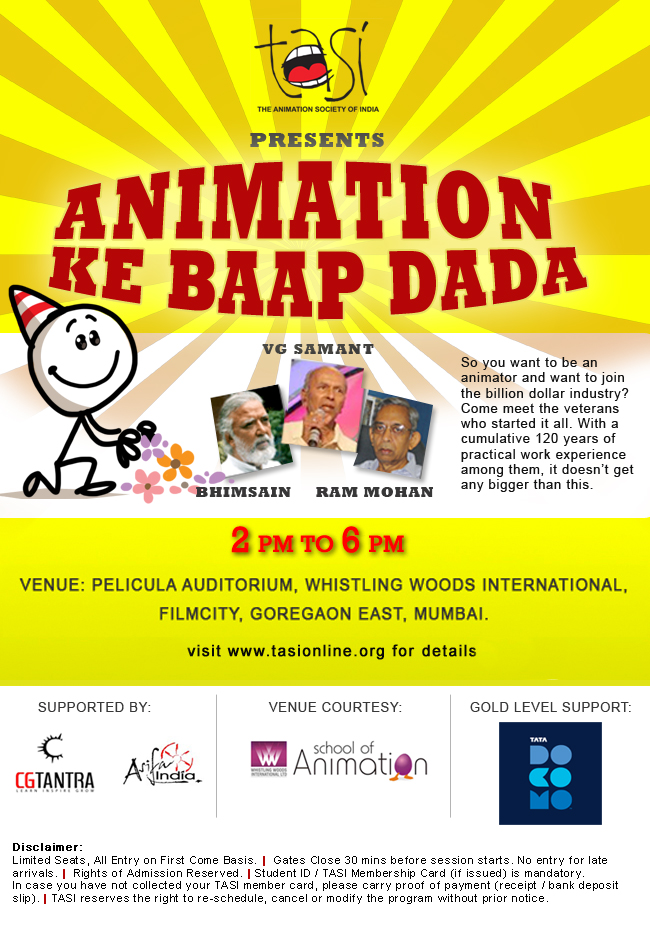
Speakers: VG Samant, Ram Mohan, Bhimsen Khurana Date: 23 Jan, 2010 Time: 2pm to 6 pm Venue: Película Auditorium, Whistling Woods Internacional, Film City, Goregaon (E), Mumbai
A trip down memory lane of Indian Animation.
On 23rd Jan, TASI conducted one of its most sought after session –Indian Animation Retrospective at Whistling Woods Internationals’ sprawling campus. The journey into time came alive when the pioneering stalwarts themselves enthused a 400+ strong audience with their anecdotes, trials and tribulations in trying to kick-start the Indian animation industry during the late 50s.
The Indian Animation Retrospective package –the first of its kind, curated by TASI in consultation with the animation community, was presented by the septuagenarian VG. Samant (Director of the indelible animation short “Tree of Unity” -1972 and the first commercial blockbuster feature “Hanuman”) and Mr. Bhimsain (Director of the historic animation short “EK Anek Ekta” and many other award-winning short films). The 3rd pioneer –Ram Mohan could not be present due to a sudden emergency development on the home front. He was sorely missed on this momentous occasion.
The incubation of Indian animation started with the formation of the “Cartoon Film Unit” at the Government organisation of Films Division in the mid-50s. For the first time, Indian artists got an opportunity to learn the art of animation under the tutelage of Claire Weeks, a Disney animator who came to India under the INDO-US Cultural exchange program. The idea to initiate such an exchange to develop animation in India was mooted by none other than the then PM Jawaharlal Nehru during his visit to Disney Studios. As a direct result of Claire Weeks’ training, the short film “Banyan Deer” was produced in 1957 in India.
The Journey continues to showcase some of Pramod Pati’s stop-motion films. Pramod Pati was a great experimenter, an inspiration as the head of the Films Division in the 60s. In the early 70s short films like “Ek Anek Ekta”, “Swimmy” and “Tree of Unity” became etched in the Indian psyche due to their high exposure on the only available state run television service -Doordarshan. The enthralled and intrigued audience was taken through the entire journey as the veterans spoke about their early days at Films Division, their problems, their undying passion and underlined their determination to succeed despite heavy odds.
Photos
The retrospective journey ends in 1995 with Shilpa Ranade’s award-winning animation short “Mani’s dying” which signaled the beginning of a new era.
Each film was followed by a short discourse by Samant Sir and Bhimsain Sir that brought to light some very interesting behind the scene developments. These first hand accounts of how the films were conceptualized, financed and created including techniques used with and tips and tricks considered path breaking at the time, were most interesting. The one common fact that came to light was that all these people made their films because they loved the medium, still have the same passion and craving for working in the medium and never let monetary considerations dictate their approach.
Reiterating his passion and commitment, VG Samant implored the new generation to look at this medium as an art form, live it, breathe it, love it and practice it with determination and diligence. ‘I am always there for you for whatever help and guidance you need’. Even at this age it was amazing to see him multi-tasking. He came to the TASI session and also had a function at his training institute on the same day.
Senior animator director Mehul Virani (Crest Animation) in the audience inquired as to what was the motivation for these veterans way back in the 50s, especially when the generation today is only concerned about how much money their films will make and how they can capitalise on their creation, Bhimsainji answered, money was and is important, but never became the driver, ‘we never cared about whether our films would make money or not. What was important was that we completed the film and got the audiences to see it. That remains as intoxicating today as it was 40 years ago’. He urged gen next to imbibe expose themselves to other creative art forms as well. ‘Being a student of classical music has immensely helped me in my understanding of the film genre. I am able to practically see the edit points of my film at the conceptualisation stage. Understanding and love of music is an invaluable asset to any animation film maker’, he explained.
The early contribution by the pioneers set up ground for the unprecedented growth of the Industry since the mid-90s. This session was a homage to the contribution of these Gurus. It is a known fact that these three stalwarts have been responsible for mentoring almost all of the leaders of their next generation. This session will be remembered for a long time by all those in attendance.
TASI announced its future sessions for the coming months at the end of the event and requested all those present to keep an check on the website for details that will be updated soon.